Diamonds in the stream

Mythology and masculinity swinging in collusion

Heroism, romance and physical supremacy have once again swung into loungerooms of 21st century homes with the legendary, sweat-bound, muscle-rippling figure of Tarzan, a handsome specimen imbued with an eclectic mixture of Greek god qualities — Zeus’ ruling power, Eros’ love, Apollo’s manly beauty and Pan’s wild nature. Tarzan is a masterpiece of mythology and masculinity combined. He is always depicted as a “straight and perfect figure, muscled as the best of the ancient Roman gladiators” with the “soft and sinuous curves of a Greek god” coupled with “enormous strength, suppleness and speed” (p.109). Added to that is Tarzan’s handsomeness with his noble gaze that is “completely devoid of cruelty” (p.53). Then of course, just to make sure that this representation of masculinity is complete (and that Tarzan is a relatable hero) a sprinkling of sensitivity and romanticism reminiscent of the deity of Eleos is included — a heady cocktail indeed.
As far back as 1939, Edgar Rice Burroughs had accurately read society’s collective consciousness about masculine idealism, and as Tarzan’s phenomenal success spanning 75 years attests, these artificial constructions still appeal to the masses. Both his 1939 novel, “Tarzan of the Apes” and last year’s film, “The Legend of Tarzan” represent masculinity as a potent elixir of combined muscularity, heroism and romance that elevates values of physical prowess, strength and the capacity to love. The significance of this puerile fascination with this narrow view of masculinity lies not in its duplication of the semi-naked, muscular gods from ancient Greece nearly 2500 years ago, but modern society’s refusal to relinquish it. Unlike the Greeks who eventually rejected mythology as sophisticated thought evolved alongside a steadily burgeoning knowledge of science, today’s advanced, globally-connected world still appears entranced by it.
Both texts share a celebration of hard muscularity, which unites humanity in a mutual admiration akin to religion, art or love. In the film, Tarzan’s rippled torso glistens as he fights the Belgian army whilst Burroughs describes him as regal with a “sweat-streaked, muscular body glistening in the moonlight… supple and graceful” (p.61). Even envy from males is interwoven into his creation: “the man before him was the embodiment of physical perfection and giant strength… from one lofty branch, the agile creature swung through a dizzy arc to a neighbouring tree” like a “tightrope walker high above the black depths” (p.134). A “chilling fear” for Tarzan’s welfare, however, quickly disintegrates into a “keen admiration and envy of those giant muscles and that wondrous instinct which guided this forest god through the inky blackness of the night” (p.134).

Both texts also use juxtaposition to emphasise the quality of physical strength — where it takes four hefty sailors to sweat and labour under the weight of carrying a treasure chest, Tarzan merely picks “it up as though it had been an empty packing case” (p.149). It’s almost amusing.
Given that admiration for muscularity dates back to sculptures in 480BC when historical heroes were immortalised in stone, its inclusion in modern representations perhaps is no surprise, but it remains a travesty. This flawed preoccupation with physical appearance allows novelists like Burroughs to tap into it and propagate it. Similar representations of masculinity saturated with virility, toughness and action (for example, Rambo and Hercules) then also join the fray, further indoctrinating the masses.

This age-old stereotype of physical perfection as the epitome of masculinity drips steadily in both texts, decrying any real progress in challenging gender stereotyping by a somewhat soporific generation that seems immune to such meaningless generalisations. Most worrying is the negation of the wondrous complexity of multi-layered personalities of the real individual… but who would watch that? Nevertheless, it is time for this superficial representation of masculinity to be banished to its rightful place on the stockpile of useless knickknacks out in the backyard.
As Burroughs had figured out all those decades ago, heroism is a necessary ingredient to complete this masculine representation, so he constructed Tarzan to be king of the apes, to crush the violent and to use his intelligence to defeat threats. It is a representation of man as warrior, conqueror and victor, offering hope to humanity that strength and power prevails. Given that Burrough’s version survived two world wars, the Great Depression and the Cold War, its appeal has been extensive.
In a matter of days, Tarzan manages multiple heroic feats. He prevents a white male arrival (Clayton) from being murdered by another and he rescues a white male unaware of the danger of the “soft bending of grasses” caused by a predatory leopard about to attack. With lightning speed, however, Tarzan’s“banded layers of iron muscles” had encircled its massive neck and “lifted up the great beast” so that it was effortlessly “raised from behind, roaring and pawing the air” (p.127). After rescuing Clayton, Tarzan then, of course, effortlessly hoists him onto his back and leaps “high into bending and swaying branches” (p.134). Where Clayton feels “incredible swiftness”, Tarzan, out of consideration to his guest, slows down and inwardly “chafed at the slowness of his progress” (p.134). In both texts, such frequent antithesis between Tarzan and other mere mortals are deliberate authorial techniques that contrast the hero’s prowess with the helplessness of others, arousing further admiration for one and not the other.
Naturally, Tarzan effortlessly and promptly returns Clayton to safety, but keeping to this narrow representation of masculinity, he cannot yet relax — he has to drag a shrieking, clawing, black-maned lioness by the tail away from Jane, who of course, faints from the shock of sighting the beast. With immense shoulders and biceps leaping “into corded knots beneath the silver moonlight”, Tarzan squeezes with superhuman strength until he successfully snaps the lioness’ massive vertebrae. Action doesn’t stop there, though. Oh no. Tarzan goes onto whisk two more white male visitors from the dreadful fate of a lion’s jaws by lifting them up into the branches of a tree. Impressively, so smooth is this hero’s grip that only one of the men notices, provoking fresh wonder at not just Tarzan’s mercy, but his stealth-like command of his environment.
Predictably, Burroughs adds to this representation of masculinity (and by default, its artifice) by turning Tarzan into a hunting hero who kills wild beasts and deposits them at the white family’s door every morning. He also watches over them, and lo and behold, within a month, Tarzan is rescuing Jane from the clutches of a massive, enraged ape intent on vengeance.

Romance and a capacity to love is another formulaic representation of masculinity in Tarzan, so in addition to his might as a hunter and fighter, he harbours an inner softness, evidenced when he sees Jane for the first time and he is filled with a “whirl of wonder” (p.123). It’s a deliberate, not-so-subtle attempt to soften Tarzan’s rugged, muscle-bound savagery and tough, steel-like exterior with a gentle chivalry and protectiveness… and just as one would expect, it is directed at damsels in distress.
When Tarzan gazes at Jane, “he knew that she was created to be protected, and that he was created to protect her”. It also seems to him “that no pleasure on earth could compare with labouring for the welfare and protection of the beautiful white girl” (p.150). Not only that, he idolises her beautiful features and her delicate, snowy skin and for an hour, he “feasted his eyes on her” and “longed to speak to her, but he dared not” because “he feared that he might frighten her away (p.157). This is once again, a clever manipulation of character to position audiences to connect with Tarzan’s sensitivity towards Jane’s sensibilities. To extend this even further, Tarzan’s reported thoughts are infused with compliments for this “golden-haired divinity” who reciprocates with flattering thoughts of her own; he is “a perfectly god-like white man tanned to a dusky brown with the strength of a wild elephant, the agility of a monkey and the bravery of a lion” (p.163). Who wouldn’t find that enthralling?

Tarzan is permanently altered by love. His thoughts consist “mostly of her”, and with a longing to always be near Jane, his thoughts reach the point of “near to worshipping her as mortal man ever comes to worship”, however, contrary to this being sinister or threatening, it is represented as devotion (p.165). Even whilst Tarzan is still a wild-haired stranger to Jane as he takes her deeper into the jungle away from her father after rescuing her from the ape, Jane regards him as a ”god-like man” and only sees him as “a protector and a friend”, all the while, marvelling at his enormous strength and beauty as well as how secure and safe he makes her feel (p.174). It is almost as if this representation of masculinity, despite its artificiality, offers audiences an escape from reality by allowing immersion of the self into a world made safer by heroes. Perhaps this further compels audiences to accept this representation of masculinity as truth.
Both texts’ use of romance with the two innocent characters instantly falling in love (rather unrealistic perhaps?) is somehow conveyed as purer than purity itself. Just a mere glance from Jane sears Tarzan’s soul, alerting readers to his vulnerability in a deliberate representation that softens the violence of the warrior who snaps lions’ necks, kills African men without remorse and enacts revenge. Burroughs develops this further when Tarzan takes Jane into an oasis where he, like a chivalrous warrior of times past, hands her his knife as an expression of trust before adopting sentry duty at the mouth of the cave for the night. Naturally, Jane has never felt so secure, alerting readers again to this “woodland demi-god’s” code of honour. Despite being majestic in form and deed, he is also servile where his only desire is “to please the woman he loved, and to appear well in her eyes” — an intoxicating cocktail of power and humility (p.189).
Burroughs also makes sure that readers are privy to Jane’s tender, enamoured reported thoughts about Tarzan’s face being “one of extraordinary beauty” with its “fine features and frank, brave eyes” unmarred by “brutal or degrading passions” (p.182). Burroughs is even so brazen as to combine Jane’s admiration for Tarzan’s physique with her belief in his inner purity to eliminate any residual revulsion readers may have for his unkempt, animalistic, primal nature. According to this pure, young maiden, Tarzan is a “perfect creature” to whom any “cruelty or baseness beneath that god-like exterior” is simply unthinkable. This further civilises Tarzan by eliminating any remaining doubts about his capacity for humanness to complete this representation of masculine perfection. Burroughs then goes one step further by linking Tarzan with religion through Jane’s reported thought of never “had such a man strode the earth since God created the first in his own image” (p.183).
Somehow then, even though Tarzan has a captivating ability to “melt away into the jungle as softly and as noiselessly as a shadow”, it is unlikely that this representation of masculinity will follow his lead (p.158).


Ref calls hand ball.

http://staff.esuhsd.org/danielle/english%20department%20lvillage/natural032.jpg
Access the “Persuasive Devices – Brief Examples and Effects” on Moodle:
Remember: practise improves skill.

https://year12atstpetersrocks.wordpress.com/wp-content/uploads/2012/10/20100626121946aduqa.jpg?w=260
In the two sample student responses provided, identify two persuasive devices and explain:

http://www.creativeeducation.co.uk/blog/wp-content/uploads/2010/10/20081203_RedPens-1.jpg
After reading the poem in class, analyse “Mending the Bridge” (there is some good analaysis on Moodle) and read the essay in the Resource Book. Here, explain the grade you would give the essay and why. What are its weaknesses? What are its strengths?

http://www.talk-pix.com/london/london002.gif
Using the thesis from class today (see below), write a paragaph about “London”.
Thesis: Poetry shares visions with readers about aspects of existence.

http://data6.blog.de/media/172/4778172_f6ced6e5c7_m.jpeg
Write an analytical paragraph about “Death of a Naturalist”. Argue to the following thesis:
Poems about a problem or an experience about nature or another strong force produce vivid subject matter and impressions.

https://year12atstpetersrocks.wordpress.com/wp-content/uploads/2012/08/swans2.jpg?w=300
Add two stanzas to the above poem, keeping in line with the subject and the mood – having said that, you can provide an “alternative ending” if you like.
No matter what, make sure you have a poetic device in every line – use some that you aren’t as familiar with like synaesthesia and sibilance and anthropomorphism (attributing human qualities and thoughts to inanimate objects or nature).

http://www.earnmydegree.com/online-education/images/learning/career_radio.jpg
How would you introduce this poem to your listeners if you were a radio broadcaster?

http://img.docstoccdn.com/thumb/orig/79705618.png
Create an awe-inspiring Thinglink and post the url here.


https://year12atstpetersrocks.wordpress.com/wp-content/uploads/2012/08/worldwar1-1.gif?w=300
Read the above poem and write a paragraph (80-100 words) of analysis using the SLIM acronym.
S – Subject & Structure
L – Language (that which creates special sounds – alliteration, assonance, sibilance etc)
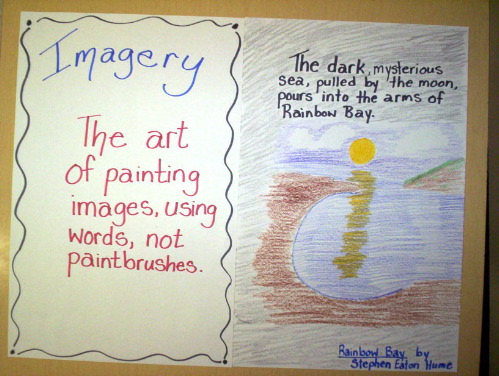
I – Imagery (that which produces vivid images in the mind of the reader – metaphors, personification etc)
M – Mood (the feeling and tone within the poem – bleak, melancholy, jubilant etc)’
The poem is in your Resource Book as well as on the internet.


http://cache.boston.com/resize/bonzai-fba/Globe_Photo/2008/11/01/1225583463_7268/539w.jpg

Only 317 men out of the crew of 1210 survived the torpedoing of the ship. Practise flashback writing by doing the following:

http://us.deuscustoms.com/files/2012/07/putting-theory-to-the-test.jpeg
Two conversations of dialogue are required:
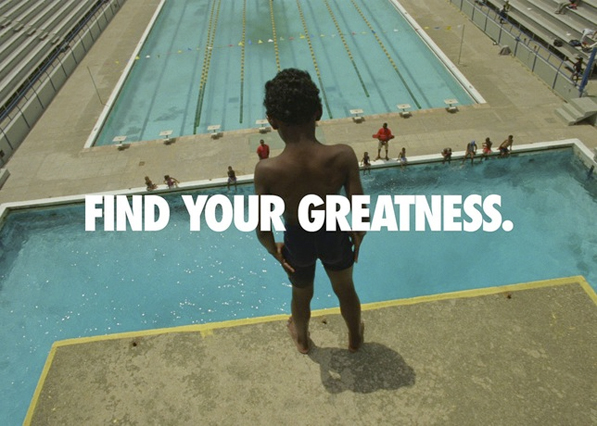
Great stories incorporate great words and great sentences. Such greatness can be achieved by absolutely anyone. Writers simply need to scrutinise every word they use and assess its effect. No effect? Delete and replace.

http://c15019356.r56.cf2.rackcdn.com/2012/07/nike-find-your-greatness.jpg
Keeping in mind the compulsory elimination of boring words and the need for a variety of sentence openers, choose three of the tips given to you in class and write a 60-80 word narrative style paragraph. It can be about anything you want, either your assignment or your life.

http://vpclil-five-senses.wikispaces.com/file/view/5-senses.jpg/209809908/776×607/5-senses.jpg
Step 1: Type up your three chosen examples of imagery that are evocative.
Step 2: Turn each of the three examples upside down by writing sentences that have the exact opposite effect – you will need to use imagery to arouse a different emotional response i.e sublime to hideous, or from peaceful to chaotic (serenity to anxiety).

http://palmersdeliandmarket.com/Palmers-Photos/little-red-hen-story-sequence-cards-i1.jpg
Tinkering with stories like fairy tales and other well-known children’s stories is always a lot of fun because they allow us to challenge entrenched ideals and values. For this task, do the following:
1. Make sure you understand the option on the task sheet that you are working with – read it again if you have to
2. Write your version of the “Little Red Hen” according to this option
3. Add a title that specifies which option (A, B, C, D) you are doing and paste it across.
Remember that it’s a narrative so it should sound like a narrative with adjectives and dialogue.

https://year12atstpetersrocks.wordpress.com/wp-content/uploads/2012/07/nowhere-in-africa-3.jpg?w=300
Upload a list of themes in the movie, ones that can be woven into a narrative.

https://year12atstpetersrocks.wordpress.com/wp-content/uploads/2012/07/ladymacbeth11.jpg?w=229
Lady Macbeth is a fascinating character who deserves some level of contemplation. Practise writing in a monologue style with stage directions and quotes from the play by choosing one of the following theses and writing 100-200 words. It’s a brain warm-up before you start writing your actual assignment.
Just before Lady Macbeth’s death/suicide:
Decide which emotion/s you want to portray and work them skilfully into your paragraphs. Capture Lady Macbeth’s hopelessness, vulnerability, rage, despair, hunger for redemption and forgiveness, her tortured soul… or whatever emotion/s you believe are most pertinent. Think about it and make it an impassioned spiel.

Monologues are thoughtful, personal, revealing pieces of writing about a character and his/her attitudes about important issues and other people. Having some good examples at our fingertips will help us all when it comes to not only writing our monologues, but performing them.
Step 1: Search the internet for some good examples to share and when you have found one, upload the url (or imbed the clip) for us to watch. If someon has already uploaded it, you must choose another one. There are to be no double ups.
Step 2: Provide three reasons as to why your chosen monologue is a good example of one.
Step 3: Provide three reasons as to how the monologue could be improved.


http://s3.amazonaws.com/readers/2011/12/05/dagger_1.jpg
Choose a passage from “Macbeth” with imagery, and find three different images from Google to best represent it. Afterwards, explain its effect in the scene.


Find an example of repetition in “Macbeth” and explain its effect. What is it? Why is it there? Does it fall into characterisation, dramatic tension, irony, dialogue.

http://www.theprofessors.com.au/product_images/x/376/allens-fantales-loose__85668_zoom.jpg
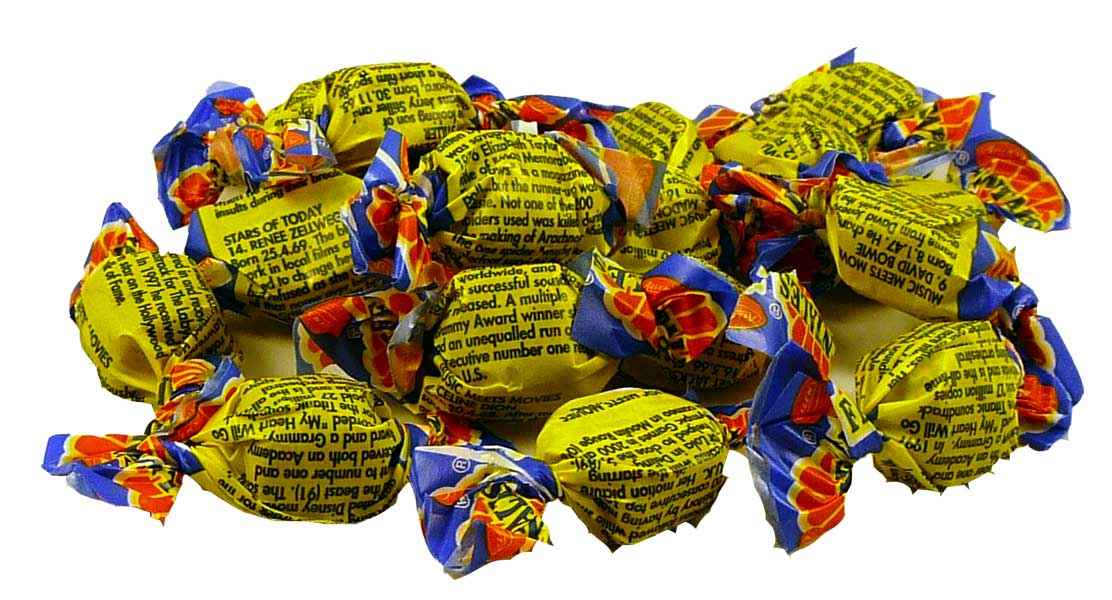
Step 1: Upload your analysis of the Fantale. Be precise. Be concise. Be specific. No general statements are allowed.
Step 2: Read everyone’s and make a comment about its clarity and depth.
Step 3: Access the analysis done by Year 11s and compare their responses with your own. Are yours as good as theirs? If not, why? FIX YOUR APPROACH to your analysis so that it becomes just as polished, if not better.
NOTE: A Martian who has never had the lolly before should almost be able to taste it and visualise it without either seeing it or eating it. That is the test.
http://static.zenimax.com/bethblog/oldcontent/lists-full.jpg
Write a list of why, or why you don’t, like Shakespeare. Follow the format in the play itself – there are many instances of lists being rattled off by characters – for eample, Malcolm’s speech to Macduff and vice versa.

http://dontmakemenuts.com/wp-content/uploads/2011/10/witches-brew.jpg
Devise a lovely stew that is the antithesis of the real witches’s stew in “Macbeth”.
http://vapidandvain.stumbleupon.com/tag/computers/
Choose an example of dramatic irony (each student has to have a different example – absolutely NO double ups) and do the following:

http://1.bp.blogspot.com/-n72gnqbdm78/TatkpJK0oyI/AAAAAAAAACI/QfhgBC6fFuQ/s1600/imagery.jpg
dialogue-bulles.com
Choose an example of dialogue (each student has to have a different example – absolutely NO double ups) and do the following:
Choose an example of dramatic tension (each student has to have a different example – absolutely NO double ups) and do the following:
Choose an example of characterisation (each student has to have a different example – absolutely NO double ups) and do the following:

 Learning Together